
The Second Spring
Starting Your Writing Career Later in Life
Autumn is a second spring when every leaf is a flower. —Albert Camus
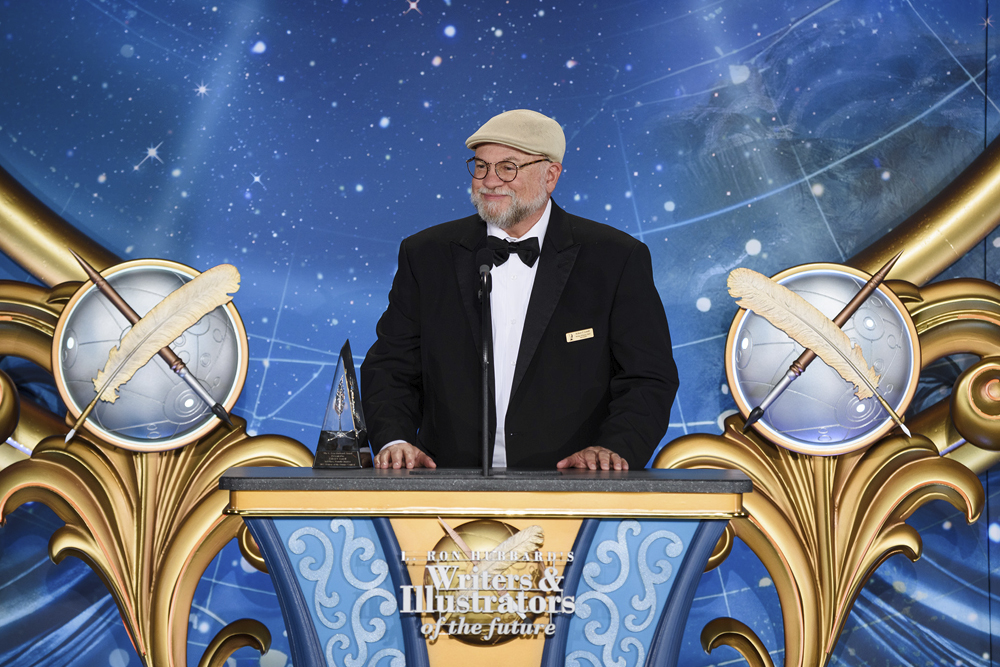
 Some of us are born storytellers, full of tales yearning to burst into bloom with the first breath of spring. I know one young author who published 27 books before her sophomore year in college, and she’s still growing strong. Others, like me, need some rings under our bark before we bear our first creative fruit. I was over 60 when my story “Kill Switch” won a place in L. Ron Hubbard Presents Writers of the Future Volume 41, and I wasn’t the oldest winner in the volume. It always irks me when someone says Writers of the Future is a contest for young writers. It’s a contest for aspiring writers in all seasons of life.
I dreamed of writing science fiction and fantasy since I started reading those genres in middle school, but I never took my dreams seriously enough. Covid was my call to adventure. The Pandemic made me realize I might run out of time before I ran out of excuses. I took online classes like the unique and totally free Writers of the Future course while sheltering in place. When the lockdowns unlocked I reached out to past winners and contestants, joined an incredible writers’ group, and found an invaluable mentor, Volume 35 winner Wulf Moon. I wrote and wrote and entered the contest every quarter until one of my stories came up a winner. After more than fifty years as a reluctant hero, Writers of the Future became my ongoing Hero’ s Journey. It can be yours as well, no matter how old you are.
Strong Roots Bear Good Fruit
Starting a creative career in midlife or later has lots of advantages. The greatest of these is experience. We’ve ridden the emotional roller coaster more than a few times. We’ll never forget the painful ardor of our first crush or the healing sorrow of realizing it was not meant to be. Discovering new lands and cultures? We’ve lived in towns that weren’t built when we were born and worked in countries that weren’t countries when we were in school. Try/fail cycles? We fall on our faces on a daily basis and get up with a little help from people who love us. Character development? We’ve supported our partners, cared for our parents, raised our children and seen them become everything they hoped to be.
Or not.
You don’t get as far as we have without at least a peek into the abyss. The most noble quest can fail; not all roads can be taken; some doors stay shut. Tears and scars help make us who we are. Many of us begin our creative journeys when pain and loss create voids in our lives or reveal those that were already there. What does not kill us makes us stronger writers.
Adding laugh lines to our faces often brings another big advantage. Securing uninterrupted time for writing is always a challenge, but handing off responsibilities for parenting or work can make it easier. Dedicating time and space to writing makes it possible to enter flow state, a not-so-secret weapon for productivity for authors of any age. It’s all about getting the most out of the time we’re given.
The final advantage we mature writers have is a strength often hidden even from ourselves. We’re better able to deal with rejection. Rejection is an unavoidable part of the writing life, especially when we first gather the courage to send our work to publishers. I’m not saying that rejections hurt less as we get older. I wish! The story I submitted the quarter before my winner got a flat rejection, which landed like a punch in the gut. I am saying that our life experience makes us more able to roll with the blows and put rejection in perspective. We wouldn’t have made it this far without developing at least a little resilience. We also know the value of a support system such as a good writer’s group, which you can find or form by connecting with contestants of all ages in the Writers of the Future Forum.
When the Leaves Start Falling
Being chronologically gifted has downsides as well. We have less energy than we once enjoyed. This can mean shorter writing sprints, longer breaks between projects, and fewer trips to cons, book fairs, and other career-enhancing events. We can still make connections and socialize, but all-night brainstorming and filk song jam sessions are right out.
We’re also more prone to health issues, thieves of time even more notorious than procrastination. Self-care is important for all writers, but for us it’s critical. The time we take for our physical and emotional health isn’t time taken away from writing, it’s a force multiplier.
Speaking of time, the clock ticks louder the older we get. Very early in my career, I was talking with a young writer about whether or not an aspiring writer should have a website. (Answer: You should.) His position was that a website wasn’t necessary until you publish twenty books.
I thought about that for a minute and said, “I’m not going to live long enough to publish twenty books.”
I hope to prove myself wrong. But I don’t write particularly fast, so I’m not likely to match Writers of the Future judge Kevin J. Anderson’s total of 197 published books (and counting) or Coordinating Judge Jody Lynn Nye’s over 50 books and 200 short stories (ditto). L. Ron Hubbard wrote over 200 published novels and stories. But even if by some miracle I could match their output, I wouldn’t, because that’s not how I judge success. My goal has always been to write at least one book of the kind that inspired Middle School Me to imagine new ideas, new possibilities, new worlds. I’m still working on that, and I’m determined to fill every volume I write with wonder and love. Long or short, the writer’s journey is worth taking.
Bloom Where You’re Planted
Age is more than just a number, but that number doesn’t measure your artistic potential. Physicists tend to get their best ideas before age 30, but writers have a much longer creative lifespan. The oldest Writers of the Future winner was 70 when their story won the contest. Want to set a new record? There’s an old saying: The best time to plant a tree was twenty years ago, but the second best time is now. Whether we’re talking about trees, writing, or any of the creative arts, I must respectfully disagree. Aspire. Get started. Work on your craft. Write your stories. Enter the Writers of the Future Contest. The best time is now.
 Robert F. Lowell is a Writers of the Future winner and Baen Fantasy Adventure Award finalist. His complicated relationship with reality began when he was born between two movie studios in Burbank, California. In previous professional lives he researched and wrote about international relations, weapons of mass destruction, and terrorism. He taught at universities in the US, Costa Rica, and Switzerland and was kissed by a dancing horse in Siberia. Now he expands the universe of online learning as an instructional systems designer and writes about swords, sorcery, robots, aliens, and mystical beasts as a member of the Wulf Pack Writers. He, his wife Lady Lowell, and their dog Murphy live in the foothills of the Sierra Nevada. Step into his universe at www.robertflowell.com.

Great article, great advice, Fred! Loved your term “chronologically gifted.” 😊